
Hummus During Pregnancy: Ingredients and Fridge Habits
A practical pregnancy guide to hummus ingredients, opening instructions, cold storage and checking a specific recall.
The dip looks simple. Its handling history may not be. Hummus during pregnancy is a product and preparation question: check ingredients, refrigeration, opening instructions and any current recall affecting the exact item. There is no reason to treat every hummus recipe as identical, or to assume a “fresh” label settles the decision.
Begin with the package or recipe
Hummus commonly contains chickpeas and tahini, but formulations vary. If sesame or another ingredient is relevant to an allergy, read the actual list and follow your allergy plan. A plain-looking dip can still contain something important to your needs.
For a refrigerated tub, check that it is appropriately chilled when purchased, transport it promptly and follow the label after opening. A shelf-stable product before opening can have different storage instructions afterward. Keep the package so the product and batch can be identified if needed.
Homemade gives you clearer information
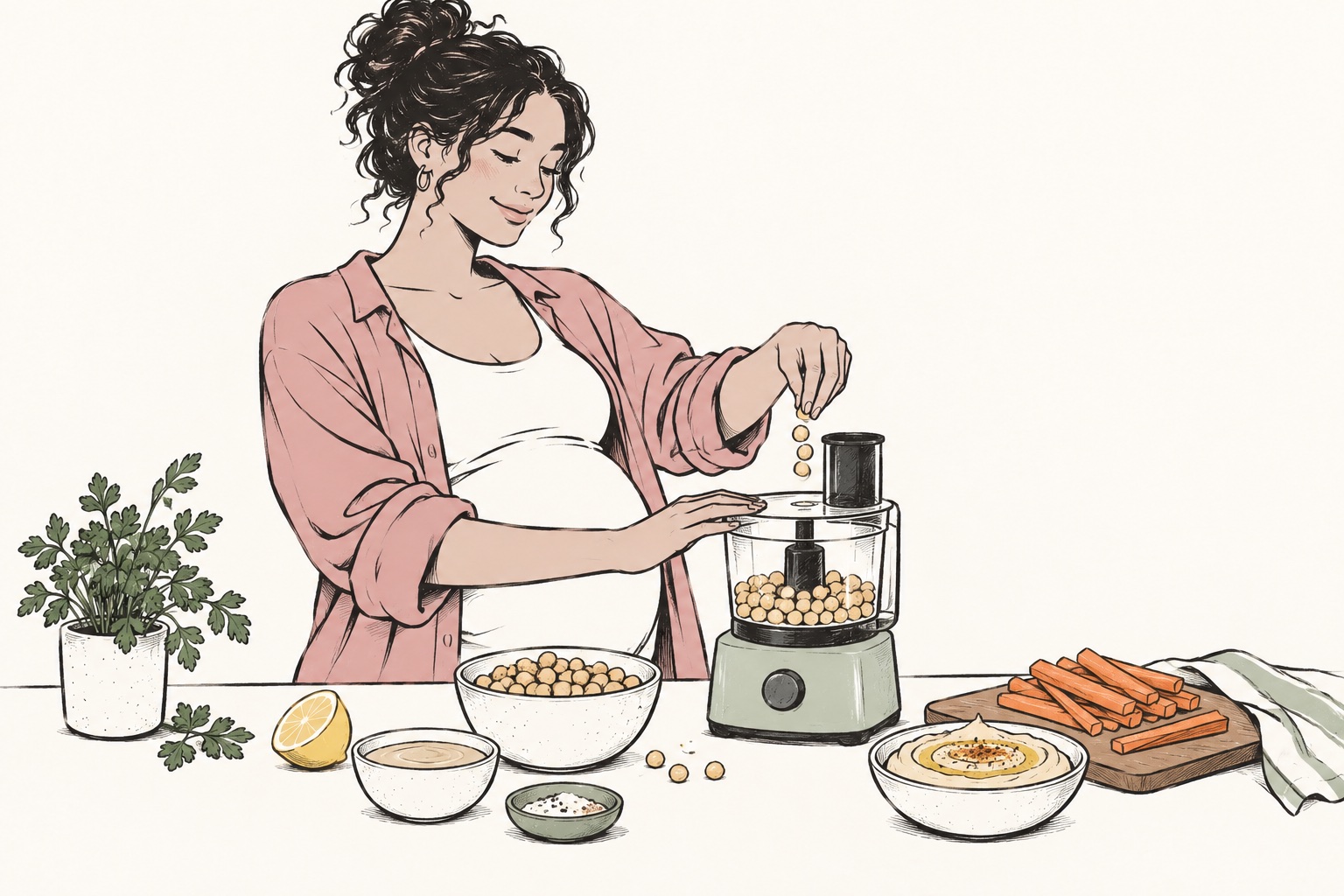
Making a small batch lets you know the ingredients and preparation date. Use properly prepared chickpeas, clean equipment and produce handled appropriately. Cool and refrigerate the finished dip when required rather than keeping the blender jug on the counter for the afternoon.
Homemade is not automatically safer; its benefit is that you can control and remember the steps. A clean food processor and a prompt refrigeration routine matter more than a claim that the recipe is “natural.” The CDC food handling guide gives the underlying habits.
Serve a little, keep the rest cold
Put a small portion into a bowl and return the tub to the fridge. Use a clean spoon rather than repeatedly dipping a half-eaten vegetable into the main container. At a gathering, replenish a fresh serving instead of leaving the entire batch on the table.
If the time outside cold storage is unknown, choose another option. Do not rely on smell or a smooth surface to reconstruct that history. A dip can look normal even when it was not kept appropriately.
A recall is about the actual item
Check the FDA recall listings if you hear about a product notice. Match the brand, product description, lot or date and any geographic details in the notice. A headline about one hummus recall does not establish that every tub is affected, and a general blog cannot certify that yours is currently unaffected.
Follow the recall instructions instead of trying to rescue an affected product. Keep this as a precise check rather than a reason to search endlessly every time you eat.
Where Embryly helps
A barcode scan can help you find product information and identify questions worth checking. It cannot know when you opened the tub, how it traveled home or whether a database entry includes a new recall. The package and your fridge routine supply that context. Pair the dip with foods you enjoy and handle them with the same care.
Sources
A little more reading
Pregnancy Lunch Ideas for Work, Home and Busy Days
Find practical pregnancy lunches for home and work, with meal options and realistic refrigeration and transport plans.
Read the guide
A Pregnancy Grocery List That Makes Dinner Easier
Build a practical pregnancy grocery list around usable meals, varied ingredients, label checks and your actual week.
Read the guide