
Leftovers During Pregnancy: Store and Reheat Them Well
Make tomorrow's meal easier with practical guidance on cooling, dating, storing and reheating leftovers during pregnancy.
Tomorrow's lunch starts with what you do tonight. Leftovers during pregnancy need prompt refrigeration, appropriate fridge storage and thorough reheating. A container that looks fine can still have an unknown handling history. The USDA leftovers guide gives practical instructions for cooling, storing and warming food again.
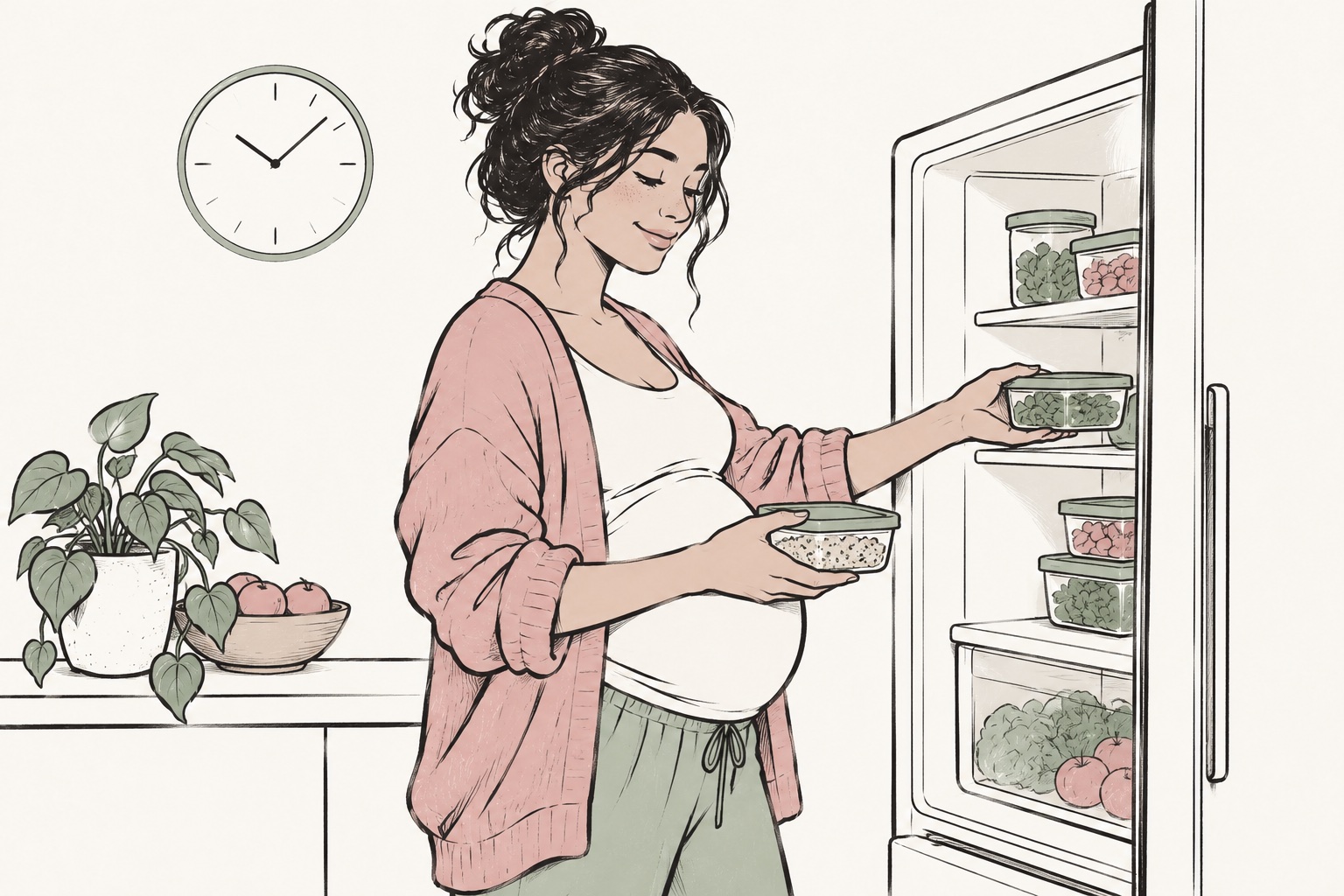
Put the food away before the evening gets busy
Once you have finished serving, portion food into clean, shallow containers. Do not wait for a large pot to cool completely on the counter. Smaller portions cool more efficiently and make it easier to reheat only what you want.
Keep track of time from when the food leaves safe holding conditions, including the meal itself. The counter is not a pause button for bacterial growth. If you cannot remember how long a perishable dish has been sitting out, reheating later cannot reliably undo improper storage.
Give the container a date
Write down when the meal was prepared. Then check the cold storage chart for the specific food and follow any stricter product instructions. Different items have different storage recommendations; “leftovers” is not a license to keep everything for the same amount of time.
For common cooked leftovers, official guidance generally uses a three to four day fridge period. Freeze portions earlier if you will not use them in that time. Label what is inside as well as the date so a mystery container does not become tomorrow's decision.
Reheat the middle, not just the edges
Follow the safe temperature chart for leftovers. Stir or rearrange food during microwave heating when appropriate, respect standing instructions and check more than one spot. A bubbling edge does not prove the center warmed sufficiently.
Choose a microwave-safe container and a method suitable for the dish. A thick casserole, a bowl of soup and a small portion of rice heat differently. Reheat the portion you intend to eat rather than cycling the whole batch through warming and cooling each day.
Smell is useful for quality, not proof of safety
Discard food with signs of spoilage, but do not use an ordinary smell as evidence that every storage step was acceptable. Some harmful germs do not announce themselves. A meal can look the same before and after spending too long in a warm car.
Make the routine smaller
Keep a marker beside your containers. Put a small “eat first” area in the fridge. Freeze an extra portion when you cook something you know you enjoy. These are organizing habits, not complicated new recipes.
Embryly can help you choose a meal idea or identify ingredients, but it cannot reconstruct a container's history. Your date note and storage routine supply that missing context. When the history is doubtful, choose a different meal rather than asking a scan to guess.
Sources
A little more reading
Pregnancy Meal Prep: Plan a Few Meals, Keep Them Flexible
Plan a few flexible pregnancy meals with manageable portions, clear dates, appropriate cooling and a realistic backup.
Read the guide
Takeout During Pregnancy: From Doorstep to Dinner
Handle pregnancy takeout from ordering to arrival, with practical preparation checks, prompt storage and leftover planning.
Read the guide