
Can You Drink Apple Cider While Pregnant? The Label Check
Check apple cider pasteurization, alcohol content and storage during pregnancy before choosing your autumn drink.
The cozy drink deserves one quick label check. During pregnancy, choose pasteurized apple cider or cider treated to kill harmful germs, and avoid alcoholic hard cider. “Fresh,” “local” and “served warm” do not tell you whether a drink was treated appropriately. The FDA fall food guide specifically addresses cider.
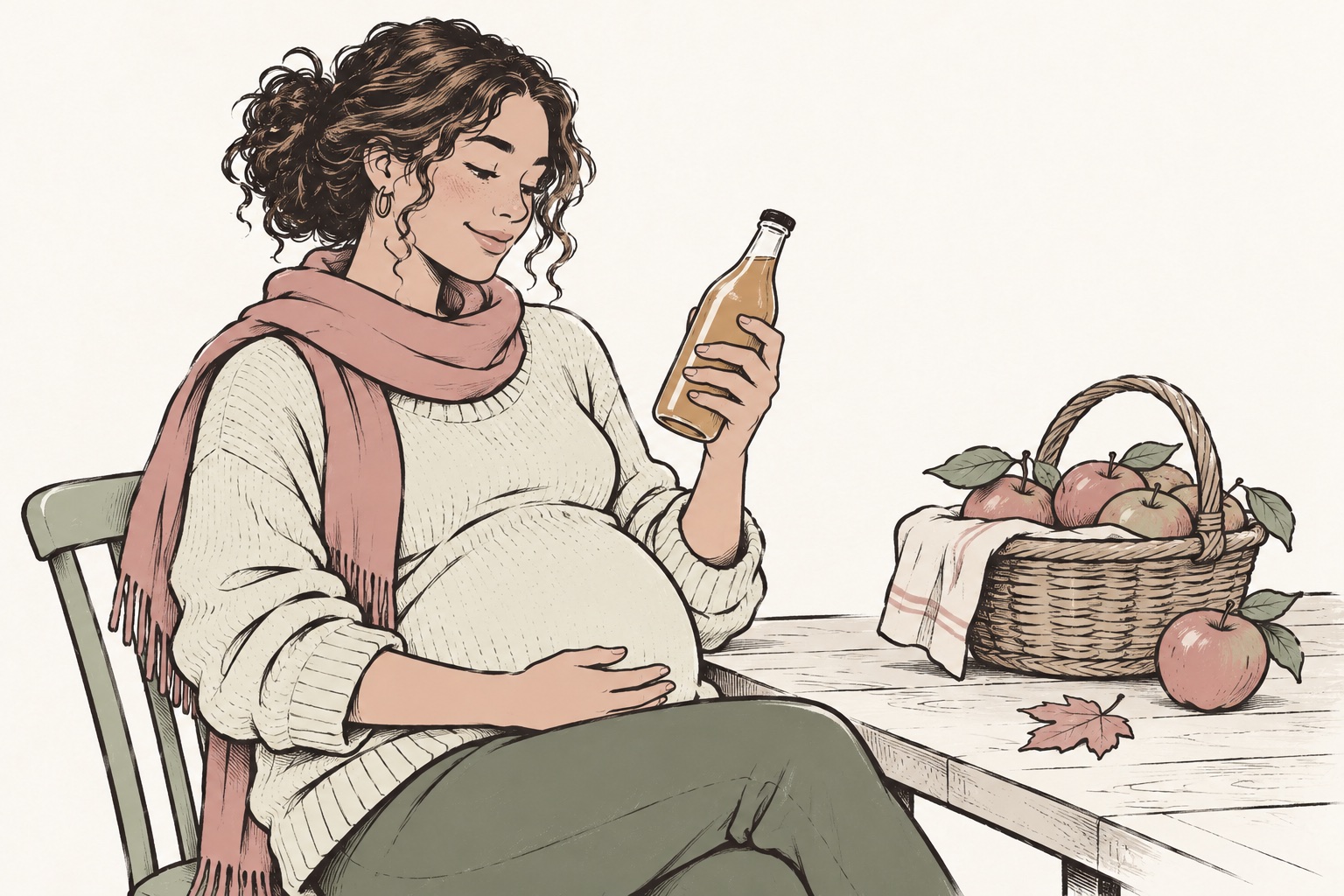
The word cider has more than one meaning
In the United States, apple cider often means an apple drink without alcohol. Hard cider is alcoholic. In other countries, “cider” commonly means the alcoholic version. Check the actual bottle, menu and alcohol information rather than assuming the word means the same thing everywhere.
For a nonalcoholic cider, the next question is processing. Look for a pasteurization statement or clear information about another treatment that kills harmful germs. An orchard setting and a homemade label may be lovely; they do not answer that question.
Ask before the cup is poured
At an apple farm or market, say, “Is this cider pasteurized or otherwise treated to kill harmful bacteria?” If the seller cannot clarify, choose a clearly labeled alternative. Fresh juice sold by the glass may not carry the warning labeling used on some packaged unpasteurized products. The FDA juice guidance explains why the absence of a warning is not enough.
A drink that is comfortably warm is not necessarily one that has been boiled. Warming a pot for serving and applying a verified safety treatment are different processes. If preparing unpasteurized cider at home, follow current official instructions rather than guessing from steam.
If you are starting with unpasteurized cider
The CDC pregnancy food table identifies bringing unpasteurized juice or cider to a rolling boil for at least one minute as a safer preparation option. Use that complete instruction; a brief warm-up in the microwave is not equivalent. A clearly labeled pasteurized product is often the simpler starting point.
Keep the treated or pasteurized drink stored according to its label, including refrigeration when required. Processing does not give an opened bottle unlimited life. Use a clean cup and avoid leaving a perishable drink on the table throughout a long gathering.
Make room for the season
A warm apple drink, a walk at the orchard and a cinnamon scented kitchen can still be part of autumn. Choose the bottle with clear information, then enjoy the occasion without trying to infer processing from its appearance.
Embryly's barcode feature can help with product information, but compare the result with the actual label. A photo of a mug cannot reveal alcohol content or pasteurization. If you are unsure about a product you already drank, ask your care team about the specific exposure rather than using the image as proof either way.
Sources
A little more reading

Halloween While Pregnant: Candy, Cider and Party Food
A calm pregnancy guide to Halloween treats, cider, raw dough and perishable party food, with practical choices.
Read the guide
Smoothies During Pregnancy: Build a Better Blending Routine
Build a useful pregnancy smoothie routine with known ingredients, treated juice, appropriate produce and clean equipment.
Read the guide