
Smoothies During Pregnancy: Build a Better Blending Routine
Build a useful pregnancy smoothie routine with known ingredients, treated juice, appropriate produce and clean equipment.
A blender can make breakfast easier. It cannot make every ingredient suitable by blending it. For smoothies during pregnancy, use appropriately washed produce, pasteurized dairy or juice where included, and clean equipment. At a juice bar, ask about the actual base rather than assuming a fresh-looking drink uses treated juice. See the FDA juice guide.
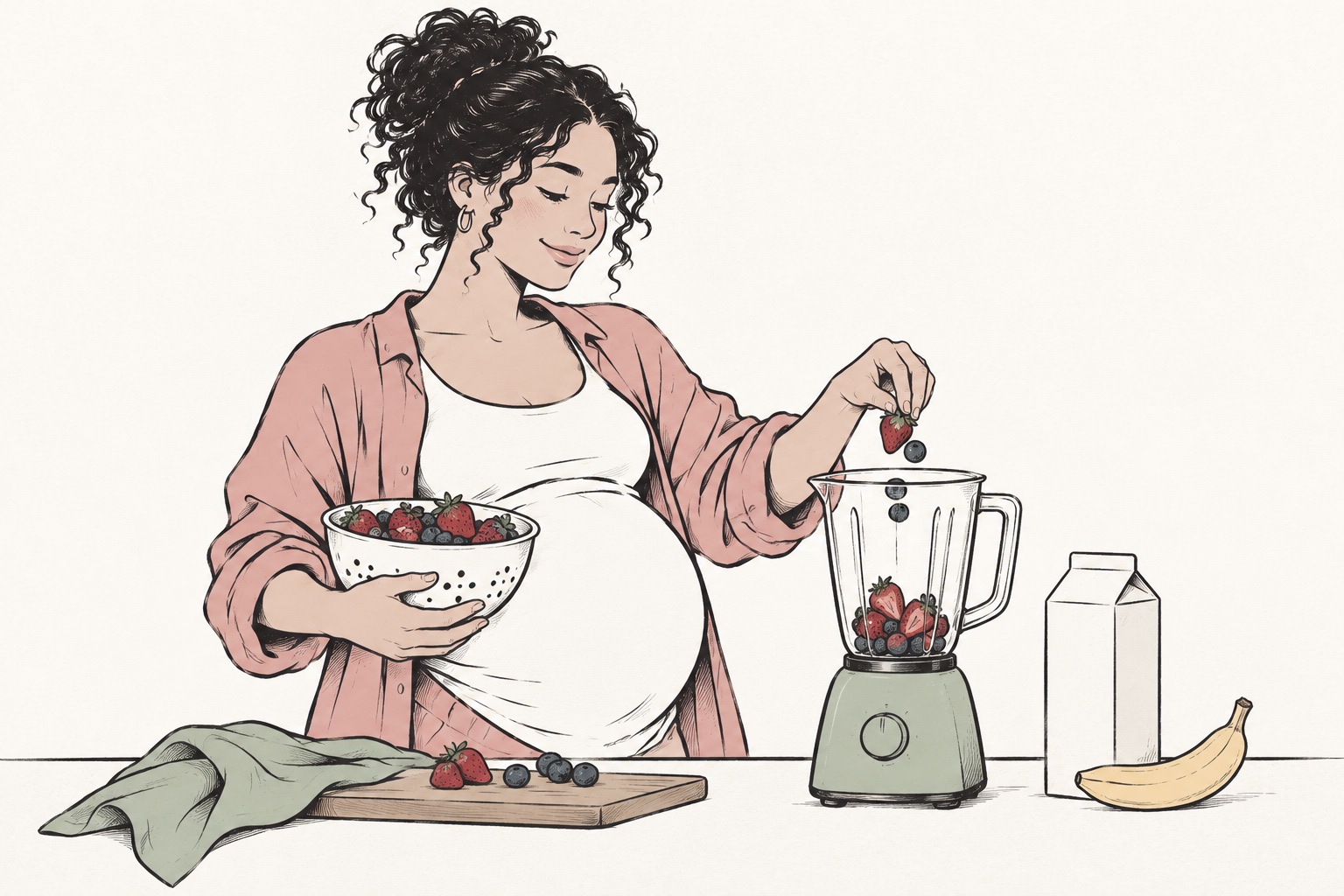
Start with a short ingredient list
Try a fruit you enjoy, an appropriate milk or yogurt, and another familiar ingredient such as oats. This is a flexible combination, not a prescribed pregnancy recipe. Choose ingredients that fit your allergies and preferences, and follow package directions for preparation.
If using frozen produce, read the instructions. Freezing is not a sterilizing step, and some products are intended to be cooked before use. Do not assume a bag is ready for raw blending because the pieces look clean or because a social-media recipe uses the same fruit.
The liquid base is a real decision
Use pasteurized milk products and clearly identified juice. A freshly squeezed juice added at a cafe can have a different processing history from a packaged pasteurized juice. Ask whether the juice is treated appropriately. A smoothie can be blended to order without its juice base having undergone a safety treatment.
Plant drinks vary in their ingredients and fortification. If one replaces dairy regularly, check the label and discuss your broader nutritional needs with your care team. Creamy texture does not mean that different drinks contain the same nutrients.
Be careful with mystery boosts
Powders, herbs and supplements added as “energy,” “detox” or “immunity” extras need their own assessment. A marketing name is not pregnancy guidance. Use only products that fit advice from your clinician or pharmacist rather than assuming every addition is harmless because it is sold at a juice counter.
Keep the recipe useful without adding a dozen ingredients. A drink that needs several unfamiliar powders is not necessarily better than a simple one you can make consistently. ACOG nutrition guidance emphasizes a varied eating pattern; one smoothie does not have to deliver every nutrient.
Wash before the blender does its work
Follow the FDA produce-cleaning advice, including rinsing appropriate produce before peeling. Clean the blender's lid, seal and blade assembly according to the manufacturer's directions. Food can collect in places a quick swirl of water does not reach.
Make the amount you intend to drink and handle leftovers appropriately. If taking it to work, provide suitable cold storage. A smoothie is not shelf stable because it fits in a reusable bottle.
A scan can identify, not reconstruct
Embryly may help with a product or visible ingredients, but it cannot infer every powder or juice base from the finished color. Check what went into the blender. That simple ingredient conversation is more useful than asking whether all pink smoothies are suitable during pregnancy.
Sources
A little more reading

Can You Drink Apple Cider While Pregnant? The Label Check
Check apple cider pasteurization, alcohol content and storage during pregnancy before choosing your autumn drink.
Read the guide
Pregnancy Breakfast Ideas for Mornings That Feel Different
Flexible pregnancy breakfast ideas for changing mornings, including gentle, cold and cooked options with preparation checks.
Read the guide