
Caesar Salad During Pregnancy: Ask About the Dressing
Ask about Caesar dressing during pregnancy, including egg preparation, toppings, washed leaves and refrigeration.
The important ingredient may be in the dressing, not the bowl. For Caesar salad during pregnancy, check whether any uncooked egg in the dressing is pasteurized, then check the leaves, toppings and handling. A bottled dressing and a restaurant's house recipe may have different ingredients. The FDA egg guidance explains the raw egg distinction.
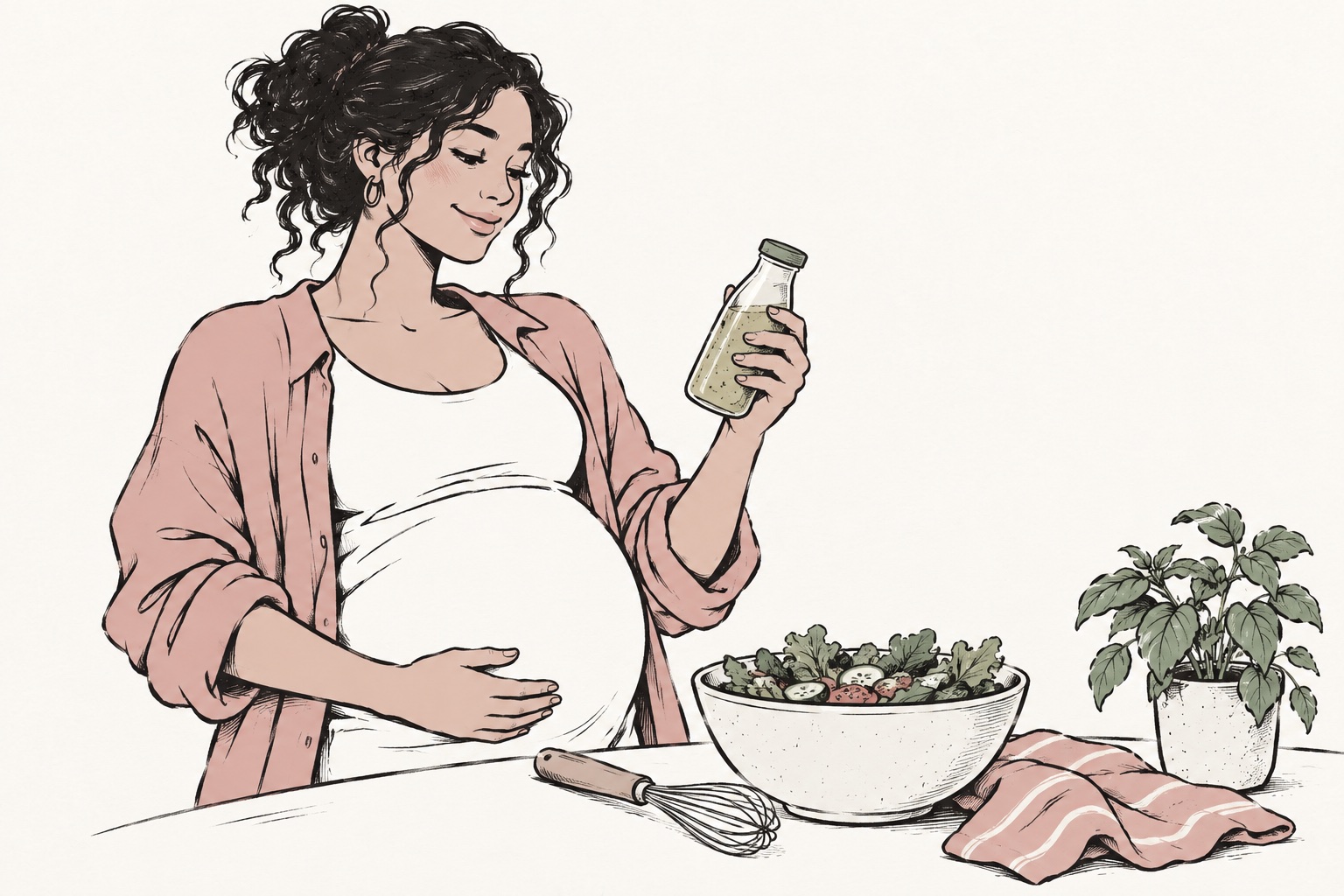
Ask one clear dressing question
“Does this dressing use raw egg, and if so, is the egg pasteurized?” That gives the kitchen a specific detail to confirm. “Is Caesar safe?” can mean different things to different people and may get an answer about the salad name rather than the recipe.
Some recipes use mayonnaise, some use egg directly, and others use no egg. Check the version in front of you. A restaurant may also change its recipe, so yesterday's answer from another branch is not necessarily enough. For bottled dressing, follow the label and refrigeration instructions after opening.
The anchovy question is separate
Anchovies can be part of Caesar dressing, and they are not the same ingredient as a raw slice of fish added to a sushi roll. Identify the product and preparation if seafood is a concern. For a fish allergy, the presence of anchovy matters regardless of whether the product is cooked or cured.
Do not use a generic egg-free badge as proof that the dressing fits all your restrictions. It could still contain dairy, fish, mustard or other ingredients relevant to you. Read the complete recipe or package information.
Check what is added to the salad
If adding chicken, ask for it thoroughly cooked and properly handled. A browned strip tells you little about its earlier storage. Eggs used as a topping should follow current pregnancy preparation guidance. For cheese, identify the type and pasteurization rather than treating every grated or sliced cheese identically.
The FDA eating-out guide encourages asking about ingredients when uncertain. You can change one element of a dish without abandoning your preferred meal. A different dressing or omitted topping may settle the question.
Wash and chill the leaves
At home, follow the produce label and appropriate washing instructions. The FDA produce tips recommend plain running water for loose fruit and vegetables, not soap. Keep perishable components refrigerated and assemble the amount you intend to eat.
If taking a prepared salad to work, use suitable cold storage. Dressing on the side may help the texture, but it does not remove the need to keep perishable ingredients cold. Think about the whole time from fridge to lunch.
A photograph cannot read the recipe
Embryly can recognize a salad or suggest ingredient questions, but it cannot know which egg product was whisked into a pale dressing. Use the scan to narrow the question, then verify it with the label or cook. That is a more useful route than trying to decide whether a salad is suitable from its name alone.
Sources
A little more reading

Can You Eat Eggs While Pregnant? Runny, Scrambled and More
Understand US pregnancy guidance for runny eggs, cooked egg dishes and uncooked sauces, with useful ordering questions.
Read the guide
Salads During Pregnancy: Leaves, Toppings and Storage
Check salad leaves, dressings, toppings and cold storage during pregnancy without relying on a healthy menu label.
Read the guide