
Reading Food Labels During Pregnancy: Beyond the Barcode
Read ingredients, allergens, processing and storage on the actual package alongside your pregnancy barcode lookup.
A barcode can locate a product. The package tells you which version you are holding. During pregnancy, read the actual ingredient, allergen, processing and storage information alongside any app lookup. A database entry may be incomplete or refer to a different formulation. It is a starting point for the check, not a replacement for the label.
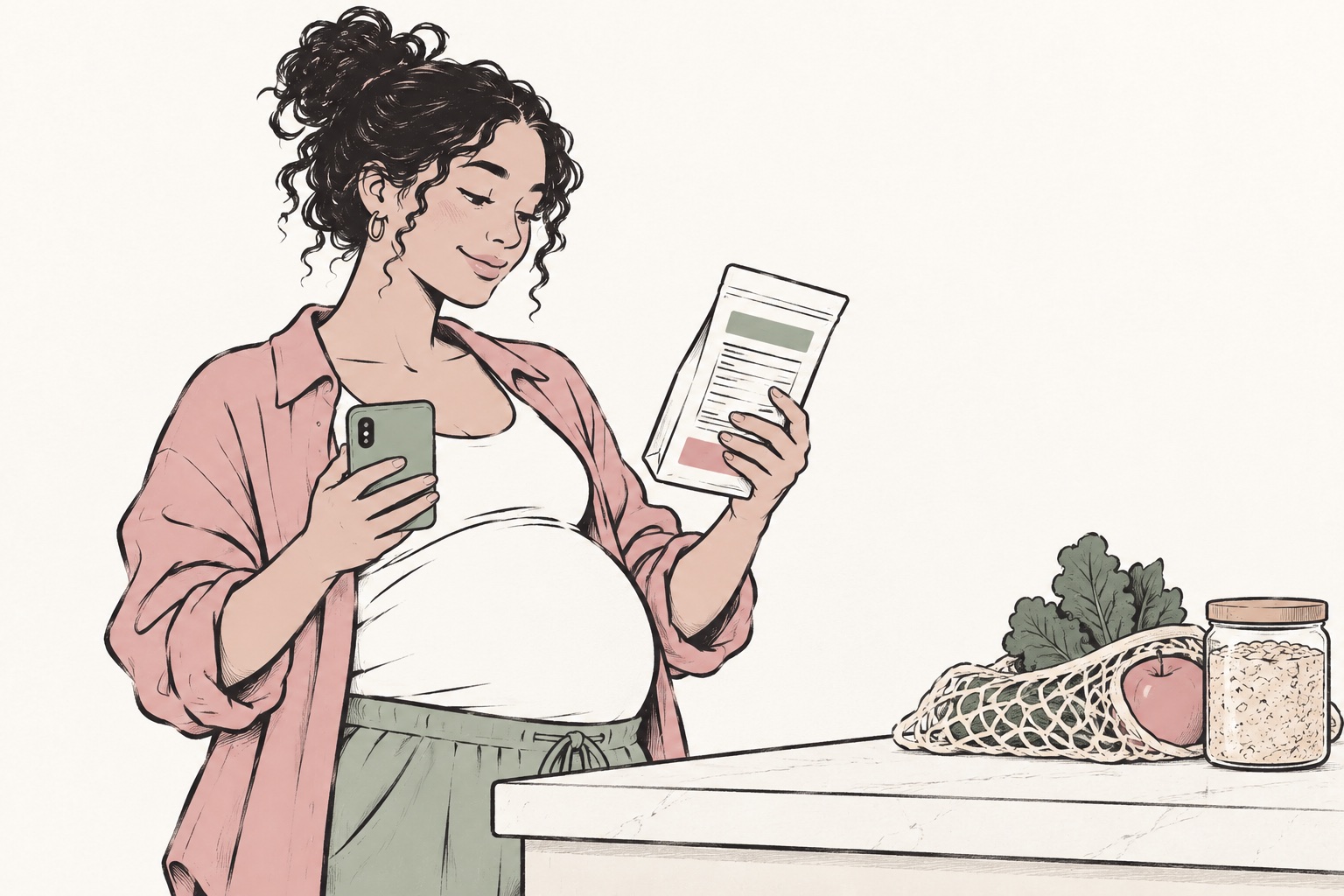
Turn the package around
The front tells a marketing story. The back usually gives more useful details: ingredients, allergen information, preparation directions and refrigeration requirements. Read those sections for the specific question you have rather than treating a broad “natural” or “healthy” claim as pregnancy guidance.
A familiar product can change. Check again when buying a different flavor, package size, country version or updated recipe. Two products from the same brand do not necessarily share every ingredient or processing method.
Look for the processing detail that matters
For milk products or juice, identify pasteurization or an appropriate treatment statement. If it is unclear, ask the manufacturer or choose a clearly labeled alternative. The FDA juice guide explains why fresh appearance is not processing evidence.
Then identify the food category. A pasteurization statement is important, but special precautions can still apply to a particular type of cheese or ready to eat food. Connect the package information to the relevant guidance instead of using one word as a universal approval.
Read allergen information separately
The FDA allergen guide explains the major allergens and labeling requirements for the foods it regulates. Those requirements do not mean every possible allergen or every cross-contact circumstance will be captured by a short statement.
Follow your individual allergy plan and ask the manufacturer when needed. A “may contain” statement, ingredient list and restaurant conversation answer different questions. A model's failure to mention an allergen is not proof of absence.
Instructions change after opening
A product that can be stored at room temperature while sealed may need refrigeration after opening. Read both conditions. Also distinguish “ready to eat” from “ready to cook.” Frozen packaging does not automatically mean the contents can be eaten without the cooking step.
Write the opening date where it helps, use clean utensils and follow storage directions. A barcode does not record what happened in your kitchen unless you separately keep that information.
Compare the lookup before using it
When scanning with Embryly, check the name, flavor and version shown against the package. If important details do not match, use the label and seek clarification. The Embryly source notes explain why AI and database information can have gaps.
You do not need to read every label like a legal contract. Start with the detail that decides your question, confirm the preparation and storage, and keep the package available when uncertainty remains. That is a useful habit even when an app has made the lookup faster.
Sources
A little more reading
What a Pregnancy Food Scanner Can Help You Check
Understand what Embryly's pregnancy food and barcode scans can help you check, and which details need separate verification.
Read the guide
What Cheese Can You Eat While Pregnant? Read the Label
Check cheese type, pasteurization and preparation during pregnancy, with practical label questions and shopping advice.
Read the guide